meine-keine-lieder/die Aufgabe von Musik (my-no-songs/the task, the giving up of music) (2014)
for Inge Müller
for amplified female voice/performance, bass clarinet and piano/sample keyboard (1 player)
Duration: 17 min.
Composition commissioned by the Hugo-Wolf Akademie, Stuttgart for the series "Are there still songs to sing?"
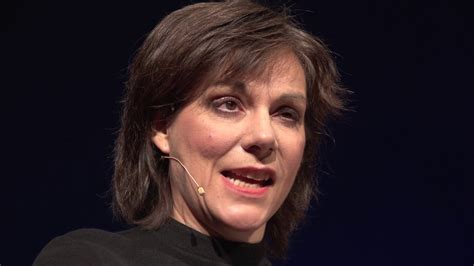
WP: 14. 03. 2015, State University of Music and Performing Arts Stuttgart, Concert HallSalome Kammer, Akiko Okabe, Sebastian Manz
Performance material available from Boosey & Hawkes
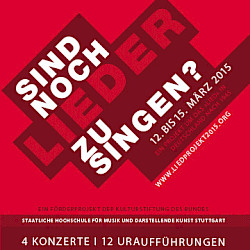
DVD Sind noch Lieder zu singen?
darauf: ‚meine-keine-Lieder’
Liedprojekt 2015
Libretto: I.t.S. (translated by Deepl)
with texts/quotes by Hannah Arendt (1906-1975) (from: Hannah Arendt and Joachim Fest, Eichmann war von empörender Dummheit. Conversations and Letters, edited by Ursula Ludz and Thomas Wild, Munich-Zurich: Piper, 2011, pp. 36-60),
2poems by Inge Müller (1925-1966): "Meine Mutter wollt mich nicht haben" (from: Inge Müller: 'Wenn ich schon sterben muß', Gedichte: Aufbau-Taschenbuch Verlag GmbH, Berlin Copyright Aufbau-Verlag Berlin und Weimar, 1985) and "Ich steh mit einem Bein am Grab" (from: Inge Müller: 'Daß ich nicht ersticke am Leisesein', edited by Sonja Hilzinger, Aufbau-Verlag Berlin 2002),
a quote by Slavoj Zizek (1949) from 'Inhärente Überschreitung' (Lèttre international, autumn 1997), lines of poetry by Ludwig Rellstab (1799-1860) from "Leise flehen meine Lieder", as well as German folk songs.
Programme text:
"meine-keine-lieder", dedicated to Inge Müller, is conceived as a scholarly and artistic examination of the "intellectual climate" during the lifetime of Inge Müller (1925–1966) in Germany. It focuses particularly on the Nazi era and its reception in the 1960s, primarily through the lens of Hannah Arendt.
At the same time, this composition serves as a tribute to Müller, whose poems (“Meine Mutter wollt mich nicht haben” and “Ich steh mit einem Bein am Grab”) have been fully integrated into the work.
What may read as a relatively "simple" description of my work was, in fact, an extremely arduous process that more than once brought me to the brink of giving up.
The "framework" of the commission presented particular difficulties. This began with the very name and self-definition of the commissioning body: the International "Hugo Wolf Academy" (!)—an association dedicated to the "German Kunstlied" (art song). This genre is the epitome of German Romantic music, carrying with it a heavy baggage: its specific "expression" (Empfindsamkeit!!), the fusion of text and music, a rigid performance practice, the dramatic expression of the singer on stage, and the "cult of interpretation."
In short, it represents what the writer Marcel Beyer called in an interview the "historical junk" (Geschichtsschrott) that haunts us composers whenever we approach the genre of the art song.
A further difficulty was the temporal parameters set by the commission: "after 1945." Such a classification inevitably raises the question of the "Before" and, consequently, the reason for the historical rupture signified by the year 1945. This, in turn, forces one to take a personal stance on this date. Which reference point does one choose? Does one opt for the "After"—the "New Beginning" ("Arisen from Ruins," as the GDR national anthem would later proclaim) or the "Year Zero" (Stunde Null)? Karlheinz Stockhausen spoke of this in 1953 when he wrote: "The cities are erased, and one can start from scratch without regard for ruins and 'tasteless' remnants."
This "Year Zero" was also proclaimed as a manifesto by the artist group ZERO in 1959... "as if a people with a two-thousand-year history could simply reset their clocks, roll up their sleeves, and pretend that the material with which they set out to build the new was anything other than the rubble of their own past," as Thea Dorn angrily wrote in an article for DIE ZEIT in 2011. Or does one—almost defiantly—choose the "Before," which necessarily includes the memory of the Nazi era and the Second World War?
(Footnote: Of course, I realized that the question of whether there were still songs to be sung after 1945 was intended primarily in a musicological sense, with a nod to Adorno—as in: is it even possible to sing after 1945?—and that the question was, to some extent, rhetorical.)
Another hurdle was the requirement to use the German language—for purely musical reasons. For me personally, the diction of German is essentially "unsingable." While the language works wonderfully in Romantic art songs or in many of Eisler's songs (some of which I admire greatly), what lies beyond that?
There is magnificent contemporary German poetry, but should one "compose" it? Set it to music? Force it into a song? Most attempts to do so in recent decades have, in my view, argued against it. (I feel quite differently about English or French, which I have often used in my songs.)
For all these reasons, the search for text proved to be a difficult and protracted process. Although I quickly came across the poems of Inge Müller—which fascinated me immediately and seemed very fitting for the festival’s theme—I initially could not imagine how to compose music for them and repeatedly set them aside.
What further burdened this commission was the extremely traditional instrumentation (piano and voice!), the knowledge of the venue (a university—a thoroughly academic setting), and finally, the nature of the event itself: the "bourgeois" concert with all its rituals, expectations, and codes of conduct.
I was relatively certain only of what I did not want: no parody in the style of Schwitters, Jandl, Kagel, and Co. (though I briefly toyed with the idea out of desperation, knowing that this form of absurdity and refusal of meaning is always well-received); no breaking down of text semantics into minute phonetic particles; and no pure sound experiments. I wanted to work with recognizable text, with "content." And I wanted to somehow incorporate everything that seemed so difficult about this commission into the work itself.
The "rescue" finally came with the idea of moving away from the "Lied"—that is, from the unity of text and music that is constitutive of the genre—and instead working with various texts and different genres (including some folk song lyrics). This allowed me to think more theatrically and to create narrative links between the texts, the music, and the "scene": sometimes the music comments on the text, sometimes it counteracts or questions it, and vice versa.
Furthermore, I eventually decided to have most of the texts spoken; singing occurs almost exclusively on vocalises. This gave me the freedom to shape the vocal parts like a commentary, like an additional language. In my composition, because the voice is assigned to a "character," it possesses a gender in a way that differs from the traditional art song. By this, I do not mean the vocal range; I mean the body. My composition is written explicitly for a female performer, and ideally, the accompanying musicians should be male. In other words, the "performing bodies" are part of the concept.
My performer must therefore be trained in theatrical bodywork and must have learned how to handle text on stage—how to "incorporate" it. She must be able to "embody" texts that originate from an entirely different context (such as the political essays of Hannah Arendt, which are purely written texts). This is a skill few singers possess, as they are not trained for it. Moreover, she must be able to shift instantaneously from a speaking body to a singing body.
Finally, when I was nearly finished, I wondered if my piece had become too "didactic," too "enlightened," too "reason-driven"—and thus, in a sense, too "bourgeois-old-fashioned" or too closely tied to the spirit of Modernism (which is, as we know, long behind us... although there is occasional talk of a "second Modernism"). This thought haunted me throughout the final phase of composition. Shortly before the end, in an act of defiance against what I had created, I almost struck out my entire text compilation (Arendt, Müller, Žižek, etc.) to replace it with an anagram by Unica Zürn. But in the end, the desire to "say something" prevailed, and I decided, for this time, against enigma.
copyright Iris ter Schiphorst 2014
Reviews
Excerpts from the 2015 press review of the UA
Frankfurter Allgemeine Zeitung 17 March 2015, Gerhard R. Koch
Are there still songs to be sung? asked the Hugo Wolf Academy in Stuttgart - and Iris ter Schiphorst answered...
"... the most suggestive premières emerged precisely from the decided distance to the German tradition of 'emotional reproduction'. No 'sublime' text, no musical prosthesis of the past: instead, disturbing strangeness. The composer Iris ter Schiphorst based her piece 'meine-keine-lieder/Die Aufgabe von Musik' on a text collage that thematises the German history of suppressing history: Eichmann loved Schubert. Musically, this is realised as a grandiose double performance by Salome Kammer, who speaks sitting at the table, adds lamentations and sings vocalises, counterpointed by piano and bass clarinet."
nmz online, 16.03.2015, Dietrich Heißenbüttel
"Songs are poetry. The 'noch' of the festival motto also contains Adorno's dictum that writing poetry after Auschwitz is barbaric. ...Iris ter Schiphorst got to the bottom of the unease with Hannah Arendt. The spoken quotations on the Eichmann trial alternate with inarticulate, tremulous cries - perhaps the best way to make the incommensurability of the statements musically evident...."