ORPHEUS 2015/the role of music (2014/2015)
for double bass clarinet and samples
Duration: 10 min.
Heidelberg Women Artists' Prize
WP: 25.02.2015, Heidelberg City HallTheo Nabicht
Performance material available from Boosey & Hawkes
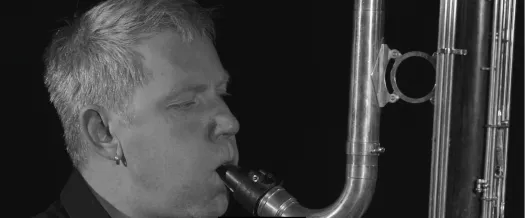
'Orpheus 2015/the task of music' is, on the one hand, a research project on the possibilities of the contrabass clarinet: Theo Nabicht must attempt the impossible, must find sounds that have never been played or heard on his instrument before.
On the other hand, the name 'Orpheus' brings into play a story that has accompanied 'music' from the very beginning:
Orpheus also attempted the impossible when he tried to enchant the underworld gods in Hades with his music in order to win Euridice back. As is well known, he failed. According to Klaus Heinrich, the legendary Berlin philosopher of religion, he lacked the persuasive power and reflective potential of language. His song, however enchanting it may have been, was ultimately nothing more than a "reflectionless act of creation - reflectionless because he excluded death from his creation, at least as long as the song lasted. The walls that he allowed to grow were not threatened with collapse, the animals that he banished to his clearing were alienated from their instincts, the realm of the dead that he entered froze before his song, in other words: the monotonous activities of the damned, with which they continued a meaningless earthly life, realistically making it visible in the first place, were still deprived of their last bleak connection with life and its, possibly changing, realisation."
From this point of view, did music have a kind of 'delusion' and thus a conservative dimension from the very beginning? Has it therefore always been a kind of 'counterforce' to reflection and thus to enlightenment? And what could be the task of music today under these circumstances?