Iris ter Schiphorst
Changeant (2004): Performanz und Performativität ... Versuch einer Rekonstruktion des Kompositionsprozesses (2021)
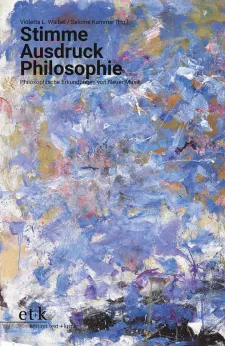
in: Stimme, Ausdruck Philosophie - Philosophische Erkundungen von Neuer Musik (Hg: Violetta Waibel, Salome Kammer) - edition text+kritik 2024
"Iris ter Schiphorst examines her own composition from two main points of view (reconstruction of the composition, attempt to reconstruct the compositional process and its 'expressive intention') and 18 sub-points (frame, voice, text localisation, form, gestures/poses, rhythm, sound material, play-along, by heart; regulation a performance? Representationand performance, The symbolic order, Performativity, Ingredients of a performance, Poses, Performance or concert performance?, Memorising - a special (perfidious) mode of representation?, Changeant - a parody, or: cheating the symbolic order?).
While the first part of the text focuses on the play's genesis, Anna Clementi's vocal register and Karin Spielhofer's textual basis, the second part reconstructs and analyses the expressive intention. In other words, we will ask what is meant when it is written that Changeant was composed for a performance. Is this the specification of a performance? What is to be expressed with the 'poses'? And why is it so important that the piece is performed by heart?
The highlight of the performance is that the composer, as she herself writes, wanted to accentuate a feminist programme to a certain extent with Changeant , and to do so in the 'guise of a work of art' (a score), in order to defy the 'symbolic order' and pose new questions about performance and representation.
Seen in this light, the piece is also a triumph of the singer (and composer) over the written word, over the symbolic order. Or to put it another way: ter Schiphorst wanted to disappear as a composer in order to reappear as a composer ."
(from the introduction by the editor Prof. Violetta Waibel)
Prologue: Voices in Changeant
Which voice(s) do we hear in Changeant?
That of the singer/performer?
That of the composer?
That of the writer?
The voice of a particular character?
A woman's voice?
A male voice?
A foreign voice?
A familiar voice?
An eerie voice?
Do you hear your own voice?
What or who does the voice represent?
Anna Livia Plurabelle?
Molly Bloom?
The 'male' fantasy of a woman's speech?
A play on the male fantasy?
An expression?
A feeling?
Mimesis, parody ... mothers' mouths,
Siri, Alexa, the telephone lady,
Voices without bodies, bodies without voices,
to have to say, to give to sing,
give someone a voice, have a voice =
have the phallus, oops ...
no - the voice ...
as an object à ...,
I hear it, therefore I am ...?
Changeant - the title says it all:
Changeant plays with roles, languages, styles, stereotypes and quotations - oscillating between serious and popular music, between performance, concert and music theatre, working with the means of parody and questioning the 'concept of work' with a wink.
Changeant was inspired by vocal performers such as Meredith Monk, Laurie Anderson, Shelly Hirsch, Diamanda Gallas, Joan la Barbara and thus refers to a rather marginalised musical history in which the singer/performer is at the centre and not the composer.
Changeant would like to continue this story a little further via the diversions of writing.
Changeant is the 'prescription' of a performance and revolves around the concepts of 'presence' and 'representation'.
(copyright Iris ter Schiphorst, 2021)